
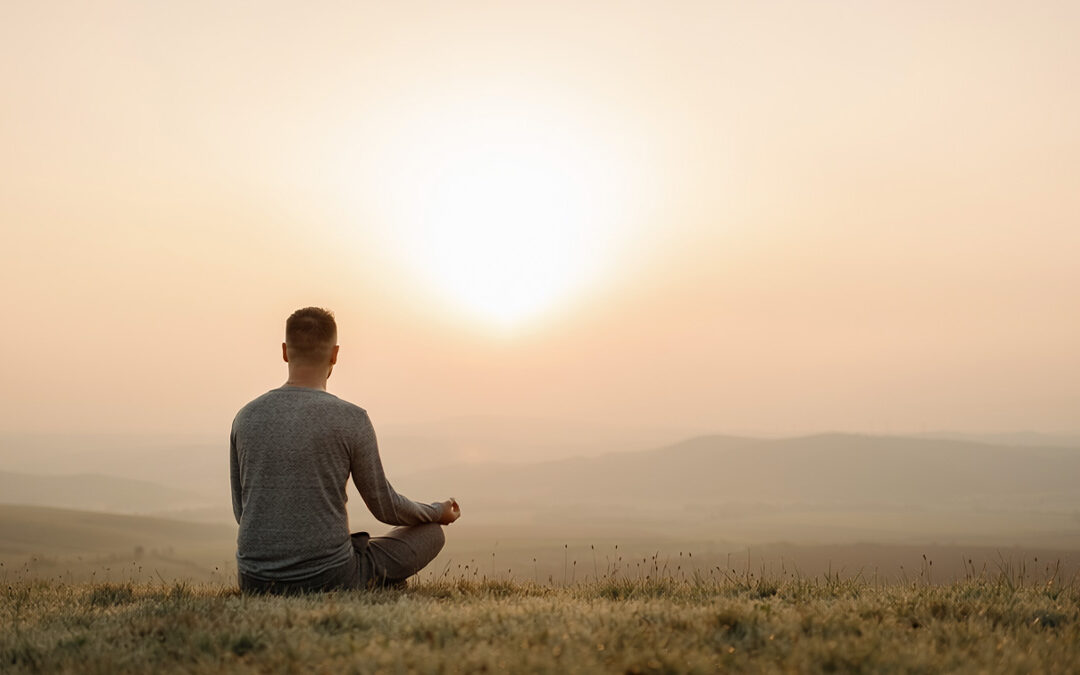
Meditation is the practice of resting your attention, on purpose, on one thing at a time. That is the whole of it. Everything written about it since – and a great deal has been written – is really commentary on that single, unglamorous act: noticing where the mind has wandered, and bringing it back.
It is probably the most studied technique in this entire survey, and the evidence for it is genuinely solid: regular practice reliably reduces anxiety and lowers cortisol. If the story ended there, meditation would sit unchallenged at the top of the list. It doesn’t end there – which is why the verdict above reads mixed picture rather than a clean endorsement. But the basic claim is sound, and worth understanding before we come to the caveats.
Where it comes from
Meditation is among the oldest deliberate things human beings have done. The earliest detailed descriptions are Buddhist, reaching back to around the 5th century BC, though the impulse is plainly older than any record of it. Almost every contemplative tradition arrived independently at the same discovery: that attention can be trained, and that a trained attention is a quieter place to live.
What is genuinely new is the last sixty years. Meditation reached the West in earnest in the 1960s through Transcendental Meditation, then shed most of its religious vocabulary and entered the clinic in the 1970s, when Jon Kabat-Zinn built his Mindfulness-Based Stress Reduction programme around it. That move – from monastery to hospital – is what produced the evidence base we now have. The mystery thinned; the benefit, for those who actually practise, did not.
How to do it
You need no equipment, no subscription, and no particular beliefs. You need a few minutes and a willingness to be slightly bored at first. Here is the plainest version.
- Sit comfortably. A chair is fine. Back upright but not rigid, hands resting, eyes closed or softened towards the floor.
- Find the breath. Don’t change it – simply notice it. Let one spot, perhaps the nostrils or the rise of the belly, be where you feel it most clearly.
- Rest your attention there, for as long as it will stay.
- Notice when it has wandered. It will, within seconds – and that is not a failure. The moment you realise you’ve drifted into thought is the moment of meditation.
- Return, without comment. No scolding, no congratulation. Bring the attention back, as you would guide a wandering child by the hand. Then do it again. And again.
That repetition – wander, notice, return – is not the obstacle to meditation. It is the exercise.
The honest part
Here is where candour is owed. The gap between ten minutes on a meditation app and genuine meditative practice is vast, and the figure the wellness industry rarely mentions is the dropout rate, which is enormous. Most people who download an app to meditate have stopped within a fortnight. The technique works; sustaining it is where almost everyone falls.
So the useful question is not “does meditation work” – it does – but “will I actually keep doing it.” If the honest answer is no, that is worth knowing early, because there are calming practices on this site with far gentler entry costs and far lower abandonment rates. Meditation rewards the persistent and quietly defeats the rest. There is no shame in being the rest; there is only value in being honest about which you are.
Finding the version that suits you
If silence feels exposing, a guided meditation gives the attention a handrail to hold – and for minds whose inner commentary won’t quieten, an external voice can break the loop in a way that sitting in silence cannot. Restless minds sometimes find that walking, attention on the soles of the feet meeting the ground, succeeds where sitting fails. None of these is more advanced than another. The best practice is the one you will actually return to.
Where to go from here
If sitting in silence is too much at first, begin with the breath given a shape. The breathing orb on this site offers a moving guide to follow, which many people find an easier doorway than an empty room – and slow breathing has a firmer, less ambivalent evidence base than meditation itself. Once the rhythm of attention-and-return feels familiar, meditation in its plainer form tends to open up on its own.
Part of Seeking Calm: From the Stoics to the Spa — a survey of what human beings have tried, across centuries and cultures, in pursuit of peace of mind. More about the book →